
Editor’s Note:
This article, “Journalists as Builders of Trust on the Modern Silk Road,” was written by Predrag Rava, a journalist with the Journalists’ Association of Serbia and a Media Ambassador to the 2025 Belt and Road Journalists Forum.
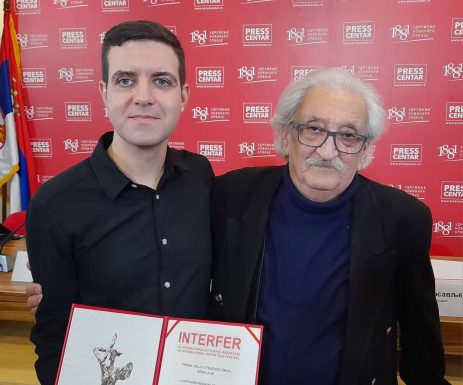
In recognition of his outstanding reportage, Predrag Rava received an award in the Newspaper Reportage category at the 30th INTERFER International Reportage Festival (Belgrade, October 12, 2025) for this very piece.
Raising awareness about the possibilities for cooperation and encouraging mutual understanding among journalists was highlighted as a key priority at this year’s “Belt and Road” Media Forum, which is part of the development strategy aimed at fostering collaboration between the People’s Republic of China and other countries in the areas of infrastructure, trade, and culture.
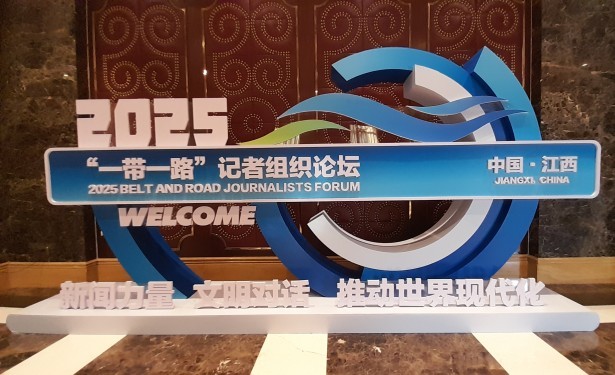
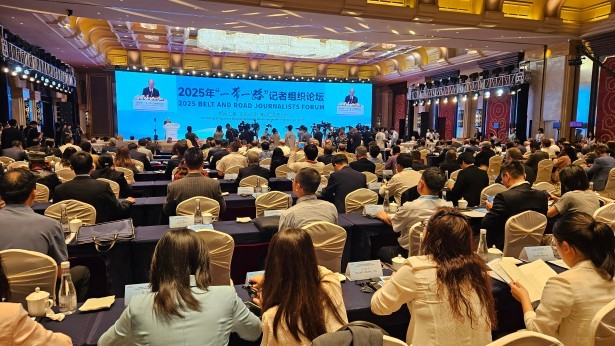
The forum was attended by around 100 leaders of journalistic associations and media representatives from over 50 countries and regions. Together with the President of the Journalists’ Association of Serbia (UNS), ?ivojin Rako?evi?, I spoke at a professional roundtable and during the official opening ceremony of the event. On that occasion, I received a certificate and the title of “Media Ambassador.” At the same time, UNS became a member of the International House of Journalists within the Belt and Road Journalists Network.
Speakers at the Forum emphasized that information today is more powerful than ever, but so is the responsibility of those who disseminate it. There were discussions on the dangers faced by journalists in conflicts worldwide and the importance of remembering their sacrifices. Participants agreed that, despite obstacles, the media can serve as a bridge between cultures, peoples, and nations—and that only objective and responsible reporting can help break down prejudices.
The Forum also offered an excellent opportunity to deepen my fascination with China through visits to the cities of Nanchang, Jingdezhen, and Ganzhou, which are true guardians of ancient Chinese culture. In these places, the spirit of tradition remains strong while technological advancement is palpable, making modern China one of the world’s leading economic powers.
To overcome many of the lingering prejudices and to better understand contemporary developments in China, it is essential to get acquainted with its rich history and culture. We are talking about a civilization nearly 5,000 years old, which has shaped a unique system of education, upbringing, religious, ethical, and ideological values in Chinese society.
Historically, most of China’s population settled between the Yellow River (Huang He) and the Yangtze. Although, for instance, Nanchang is not located on the Yellow River but instead on the Gan River—the main artery of southern China—it, along with Jingdezhen and Ganzhou, forms part of the historical region of ancient China, which has held enormous cultural and strategic significance.
Nanchang served as an important military and political centre, and Jingdezhen became world-famous for porcelain production, while Ganzhou played a key role in the trade and military routes of the Song dynasty and acted as one of the gateways of the Silk Road.
For centuries, China organized social life through public works that regulated river flows and enabled irrigation, creating a deeply rooted sense of solidarity and collectivism.
Already in the 19th century, Karl Marx and Max Weber noted the uniqueness of the Chinese social model, from the absence of private property to a bureaucracy open to anyone who demonstrated ability and knowledge. Serbian sociologist Milan Tripkovi? also emphasized that leadership roles in Chinese society are not inherited but earned through education, abilities, and results.
In contrast to Western liberal individualism, China cultivated a culture of community. This collectivism was reflected not only in systems but also in everyday customs and moral norms, still present today, especially in family and communal relations. As Viren Murti observed, throughout history, China has often rejected Western liberal individualism and imperialism more than capitalism itself, contrary to common assumptions.
The “Belt and Road” initiative is a project that goes beyond economic cooperation and becomes a global platform for cultural exchange. This modern Silk Road is no longer just a trade route, but a concept of connecting people through infrastructure, education, art, and media. For that reason, journalists could play a key role in this initiative. They build new bridges between cultures.
Serbia and China have nurtured a friendship that spans decades. Serbia recently opened the first Chinese Cultural Center in the Western Balkans, has long hosted a Confucius Institute, and also has a Belt and Road Institute. We celebrate the Chinese New Year and, most importantly, maintain a tradition of good relations with China. I believe that this type of cultural cooperation has contributed significantly to the economic ties between Serbia and China, where we lead in this part of Europe.
Bilateral trade volume increased by almost 32% compared to the previous year, and China remains Serbia’s second-largest trading partner. Serbia was one of the 28 founding countries of the global “Belt and Road” initiative in 2017, initially launched by Chinese President Xi Jinping in 2013. Numerous media agreements have been signed, underscoring the importance of information and communication in modern diplomacy.
Nanchang, Jingdezhen, and Ganzhou
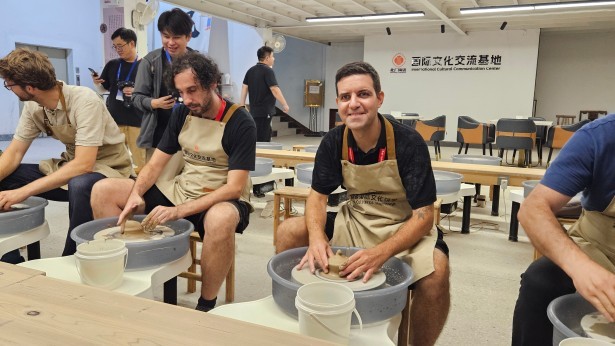
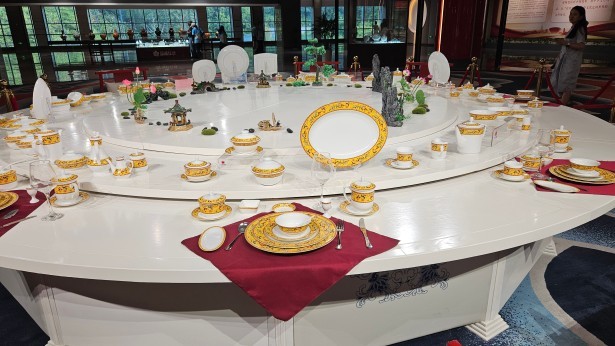
Thanks to the Forum organizers, I was introduced to many tourist attractions in this part of China. During my stay in Nanchang, I enjoyed excellent and diverse food and spent my evenings admiring the beautiful view of the Ganjiang River. The day concluded with a hands-on workshop at the Mingfang Park factory, where I had the chance to try porcelain crafting myself. This experience best reflects the vitality and tradition of this city.
That visit helped me better understand the concept of modern porcelain as a national gift and why this region still plays an important role in China’s cultural diplomacy.
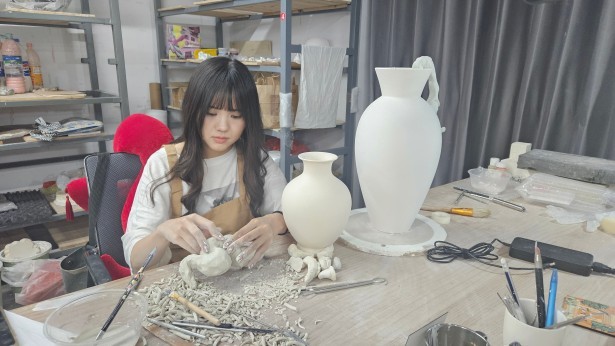
Jingdezhen, globally known for its porcelain production, revealed how tradition and modern design can go hand in hand. My visit began at the historical Taoyangli Imperial Kiln museum.
This museum preserves masterpieces of imperial porcelain and showcases the intricate techniques that have adorned ceramics for Chinese imperial courts over centuries. I then visited the Shiziyuan Cultural Park and Hanshi Village, both rich in cultural heritage. A particularly striking experience was the “Art Field: Jingdezhen” zone, which connects traditional ceramics with contemporary art.
We travelled to Ganzhou—known as the “Southern Gateway of Jiangxi”—by high-speed train, covering approximately 560 kilometres in less than three hours. This city has a long history and significant importance in Chinese culture, especially during the revolutionary periods.
Today, Ganzhou is a key city for industrial development, particularly in the energy and technology sectors. It is also known for its scenic landscapes, mountains, and rivers, as well as its rich cultural heritage. I also had the chance to visit the ancient Song City.
Life in China – First-Hand Accounts
To gain a more realistic insight into everyday life, I spoke with Serbian expatriates who have lived and worked in China for years.
“China has truly implemented what is called ‘socialism with Chinese characteristics’—a mix of market reforms and state control. The success of this model can be attributed to gradual reforms, a large domestic market enabling economies of scale, strong state support for strategic industries, and a pragmatic approach that combines market economy with state planning.”
When I asked how China managed to modernize without losing its identity, I received this response: “In recent decades, Chinese universities have made remarkable progress. Leading institutions like Tsinghua, Peking, and Fudan University now regularly rank among the world’s top 100. They invest heavily in education.”
I also asked how Chinese people view Serbia. The answer was clear: “The perception of friendly relations with China in Serbia is mostly accurate. China sees Serbia as an important partner in the Southeast European region, especially in the context of the Belt and Road Initiative. However, the average Chinese citizen probably doesn’t know much detail about Serbia, although older generations might remember Yugoslavia and Tito. Those who do know about Serbia generally hold positive views, particularly due to historical ties and shared stances on some international issues. Still, the relationship is primarily based on pragmatic interests.”
Although many Serbs have travelled to China in the past decade, few truly understand the daily life, challenges, and specifics of this vast country.
Another interviewee pointed out that Chinese people, especially younger generations, today know more about Serbia, thanks mainly to athletes like Novak Djokovic and Nikola Jokic, as well as increasingly present media coverage of bilateral agreements and investments. Older generations still mostly remember Yugoslavia, Tito, and the legendary film Walter Defends Sarajevo.
“I’ve been living in China for eight years and working in education. I’ve taught from kindergarten to high school seniors. I currently teach at a lower secondary school and head the social sciences department, which includes economics, business, history, and geography. I’ve lived in several provinces: Liaoning, Zhejiang, Fujian, Jiangsu, the city of Tianjin, and I’m currently in Sichuan,” explained one of my interviewees.
Food is a special topic. One of them noted that Chinese cuisine is very different from what we know in Chinese restaurants in Serbia. Dishes are often very spicy and vary significantly from province to province. While people in the south prefer spicy flavours, the north tends to favour sweeter ones.
“It’s absolutely true that ‘China is the safest country in the world, with almost no crime,’” he emphasized, noting that we could adopt their healthy habits—like morning outdoor exercise and evening walks, especially among seniors.
This sense of safety is something Serbs often highlight as one of the most pleasant aspects of life in China. However, there is also significant state control in society, including technological solutions that many consider practical but also somewhat intrusive.
“Retired women dance in public squares and simply enjoy every moment, whether playing badminton or practicing Tai Chi. We are most similar in our hospitality. Regardless of language barriers, they’ll gladly invite you for dinner and socializing.”
Technology is so advanced that almost no one uses cash anymore—everything is paid via QR codes. Newspapers are no longer read; everything is followed online. Metro systems in major cities are excellent. Everything is connected, so bureaucracy is much more tolerable. All you need is your ID card—no health cards or unnecessary paperwork,” my interviewee explained.
He emphasizes that, despite modernization, the Chinese people remain deeply attached to family values.
“From Confucianism comes a deeply rooted respect for parents. The oldest family members are honoured and should never be offended, as their experience and wisdom are considered invaluable. This moral belief is shared throughout the country, regardless of cultural differences between provinces. It is especially evident during the Chinese New Year, when everyone travels home, no matter how far away they work. They eat special meals, wait for midnight, and children receive red envelopes as gifts. In these moments, you can see how connected they are and how warm they are as a people, even though they work hard all year long.”
“I’ve never met a nation that works harder! And when the holidays come, everything stops so that everyone can be with their families.”
My interviewees agree that among the Chinese, we should appreciate qualities such as hard work, diligence, and discipline.
Instead of a Conclusion
Serbs living in China confirm through personal experience what academic analyses and historical interpretations only begin to suggest – that China is not only a global economic power, but also a cultural civilization seeking new ways to connect with the world.
In this process, media become a key tool: they can break down prejudices, portray real life, and bring people closer together. Media exchange becomes a bridge over which not only information travels, but also trust.
In the end, cooperation with China is not just about economics. It is a matter of culture, mutual understanding, and shared values. Without these, no railway, road, or bridge will have real meaning. Our shared future depends not only on economic growth and development, but also on cultural connection, and trust is essential for that. This is where the role of media, as a dominant agent of socialization, becomes crucial.
Today, journalists everywhere face similar challenges, not just in less developed countries as is often assumed. In an era when artificial intelligence is increasingly taking over technical tasks in journalism, what remains irreplaceable is human responsibility, ethics, and empathy. Our strength lies not in the speed with which we publish news, but in how we shape it – and the consequences it leaves behind.
The media are often a hidden weapon of cultural hegemony. Let us recall Marxist thinker Antonio Gramsci, who said that the elite maintains power in part by reproducing desirable values through culture, media, and religion. This is why, when the media report on history, they are in fact participating in its writing.
Our common future depends not only on infrastructure and the economy — but also on spiritual and cultural connectedness, and it is the media who are the key transmitters of those values. That is why the modern Silk Road is, in essence, a road of ideas, education, art, and media – a path toward better understanding of the world we live in.
Source: Journalists as Builders of Trust on the Modern Silk Road | The International